
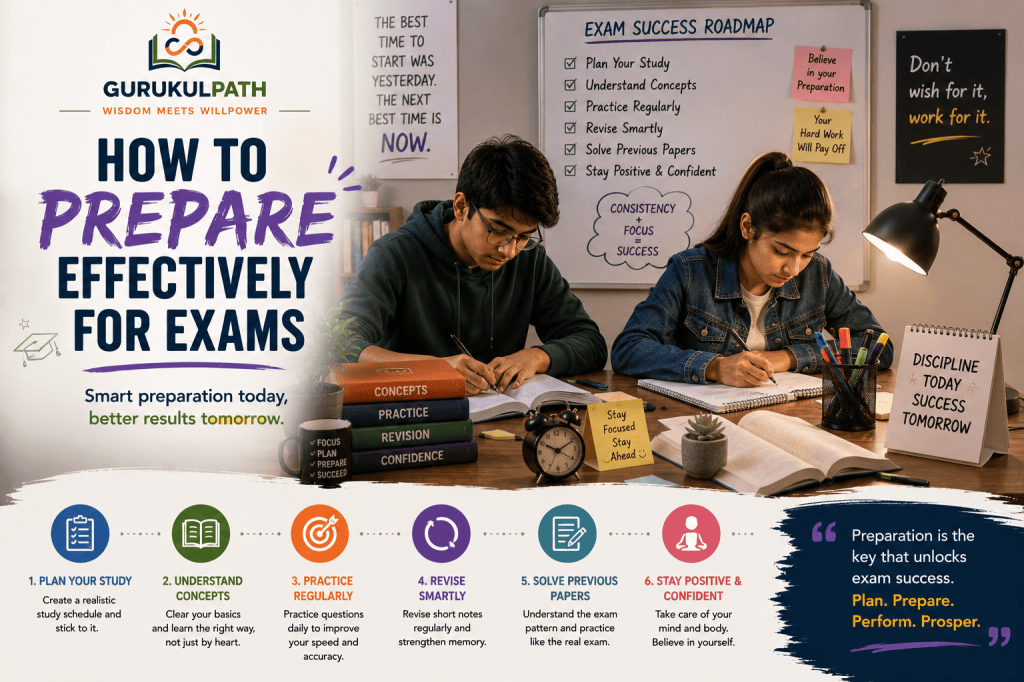
Exams are an important part of a student’s academic journey. However, many students feel stressed and don’t understand what to do when exams approach, especially if they have not prepared properly. The good news is that effective exam preparation can reduce stress and increase confidence before exams. It is not about studying for long hours but about studying smartly and consistently with proper strategy. Here are some practical tips to help you prepare effectively for exams.
1. Create a Study Plan
A well-structured study plan helps you organize your time and cover all subjects before the exam. Divide your syllabus into smaller sections and allocate specific time for each topic. Give priority to difficult and time-consuming subjects first, followed by moderate and easier subjects. This helps you utilize your energy more effectively. Following this simple and effective plan reduces stress and helps you stay on track.
2. Revise Regularly
Revision is the most essential key for retaining information. Instead of studying a topic once and moving on just to complete the syllabus, revisit important concepts regularly. Frequent revision makes memory sharp, helps to recall subjects very easily and improves confidence before exams.
3. Practice with Sample Papers and Previous Questions
Solving sample papers and previous years’ questions is one of the other factors which helps you understand the exam pattern easily and identify the areas that you need further improvement. It also improves time management and problem-solving skills and feel of the exam environment.
4. Focus on Understanding, Not Memorizing
Students often try to memorize large amounts of information before exams or run after to finish the syllabus. Instead, focus on understanding concepts and their applications, with this you can memorize faster in your own thoughts. Understanding makes learning easier and helps you answer questions more effectively.
5. Take Care of Your Health
Good health is equally important as your preparation because a healthy body makes everything easier and increases your capability. Preparation is not limited to studying alone. Therefore, ensure that you get enough sleep, eat healthy meals, stay hydrated, and take short breaks while studying. A healthy mind and body improve concentration and overall performance.
6. Avoid Last-Minute Cramming
Trying to learn everything at the last moment can increase stress and reduce retention. The day before the exam, avoid learning new concepts and focus on revising what you have already prepared. This approach often leads to better results and greater confidence. Consistent preparation over time is much more effective than last-minute studying.
7. Common Mistake
Many students spend all their time reading notes but never test themselves. Simply reading creates a false sense of confidence. Testing yourself after finishing the particular syllabus helps to understand where you are lacking. Practicing questions and recalling information from memory is often a more effective way to prepare and have true confidence.
8. Conclusion
Effective exam preparation requires good health, proper planning, consistency, and smart study habits. By creating a study plan, revising regularly, practicing questions, and maintaining a healthy routine, students can approach exams with greater confidence and achieve better results.
9. Final Thought
Success in exams is not determined by how many hours you study in a single day or how much syllabus have been completed. It is determined by the effort and consistency you maintain throughout your preparation. Start early, stay focused, and trust the process and believe in yourself to create the history.
 GurukulPath
Leave a Reply